If you’ve recently started taking a GLP-1 medication like semaglutide or tirzepatide and noticed a slight nausea, fatigue, or low energy, don’t worry, it’s common.
Your body is simply adjusting to a new rhythm.
GLP-1 medications are potent tools for weight loss and blood-sugar control, but they can also bring temporary side effects as your system adapts. The good news? With the right adjustments to your diet, exercise, and supplement regimen, you can alleviate discomfort and feel more like yourself again.
In this blog, we’ll break down the most common GLP-1 side effects and share simple, science-backed ways to manage them, so you can stay energized, comfortable, and on track with your health goals.
6 Most Common Side Effects of GLP-1 Medications
Patients generally tolerate GLP-1 medications well, but some common side effects may occur, especially when starting or increasing the dose:
- Gastrointestinal issues: Nausea, vomiting, diarrhea, constipation, stomach pain, bloating, or heartburn.
- Appetite changes: Feeling less hungry and getting full faster -intended for weight loss, but can lead to not eating enough.
- Headache or dizziness: Sometimes related to lower blood sugar or dehydration.
- Fatigue: Low energy or “tired” feeling as the body adapts.
- Injection site reactions: Redness or soreness where you inject the medication.
- Hypoglycemia (Low blood sugar): Rare with GLP-1s alone, but possible if combined with other diabetes drugs.
Serious complications are rare, but let your doctor know if you have severe abdominal pain, vomiting, or other concerning symptoms. For most people, side effects improve over time, especially with the strategies below.
Easy Dietary Tips to Soothe Side Effects of GLP-1

What you eat and how you eat matter. Since GLP-1 drugs slow digestion and reduce appetite, choosing the right foods and eating habits can ease nausea, keep your blood sugar steady, and prevent stomach upset. Try these diet tips:
- Eat small & frequent meals: Instead of big meals, have smaller portions more often. This prevents overloading your stomach and helps avoid that “overly full” nauseous feeling. Chew thoroughly and eat slowly to give your body time to digest comfortably.
- Choose gentle, easy-to-digest foods: When you feel nauseous or have an upset stomach, stick to bland, low-fat foods that digest easily. For example, plain crackers, toast, bananas, rice, oatmeal, yogurt, or broth are gentle on the stomach. These can keep you nourished without worsening nausea. If solid food is difficult to tolerate, consider a protein shake, smoothie, or soup to meet your nutritional needs.
- Avoid trigger foods: Steer clear of foods that commonly irritate the stomach. Greasy, fried, or spicy foods often make nausea and reflux worse. Sugary desserts and refined carbohydrates (such as candy, soda, and white bread) can cause blood sugar swings and exacerbate nausea. Also, limit alcohol and carbonated drinks, which can upset your stomach and cause bloating. Many people find that cutting back on artificial sweeteners, such as sugar-free syrups and diet soda, helps, as these can also cause gastrointestinal discomfort.
- Prioritize protein & fiber: Even if you’re eating less, make sure what you do eat is nutritious. Lean proteins (fish, chicken, beans, tofu) and high-fiber foods (vegetables, fruits, whole grains) help you stay full and support healthy digestion. Fiber is especially key to preventing constipation, a common side effect that can make nausea worse. Increase fiber gradually and drink plenty of water to avoid stomach upset. If you can’t get enough fiber from food, ask your provider about a fiber supplement (see Supplements section below).
- Stay hydrated: Drink plenty of water and calorie-free fluids throughout the day. GLP-1 medications slow stomach emptying, so dehydration can sneak up on you and worsen headaches, dizziness, constipation, and nausea. Sip water, herbal tea, or electrolyte drinks regularly, especially if you’ve been vomiting or have diarrhea. Limit excess caffeine and alcohol, since they dehydrate you further. Adequate hydration will help keep you feeling your best.
- Don’t skip meals entirely: Even if your appetite is low, try to eat at regular times. Skipping meals can lead to low blood sugar and fatigue. Aim for balanced mini-meals or snacks that include some protein and carbohydrates. For example, have a little yogurt, a few nuts, or a half sandwich if you can’t handle a full meal. Keeping a bit of food in your system will maintain your energy and prevent nausea from an empty stomach.
- Be prepared for “weak moments”: If you’re also on insulin or other diabetes meds, carry quick sugar snacks in case your blood sugar dips too low. Likewise, having bland snacks on hand can help settle your stomach if nausea strikes suddenly. Regular, balanced meals, plus these backups, will keep you feeling safe and steady.
Bottom line: A thoughtful diet can hugely improve GLP-1 side effects. Everyone is different, so note which foods make you feel good or bad. Over time, you’ll discover the best meals that nourish you without upsetting your stomach. And remember, these adjustments are usually temporary while your body adapts.
Exercise & Lifestyle Changes for Relief
Staying active may be the last thing on your mind if you’re feeling queasy or tired, but exercise can help alleviate many GLP-1 side effects. Physical activity helps stimulate digestion, boost energy, and improve your overall well-being. Here are some tips on exercise and daily habits:
- Go for gentle walks, especially after meals: A relaxed walk after eating can do wonders for your digestion. Light movement helps your stomach empty and can reduce bloating, gas, and constipation. Even a 10–15 minute stroll can help food move along, so you feel less uncomfortable. Many find walking also eases that “heavy” full feeling and nausea by keeping things moving at a comfortable pace.
- Stay regularly active: Aim for moderate exercise on most days, such as walking, cycling, swimming, or yoga. Regular activity promotes healthy bowel movements and prevents constipation by maintaining optimal gut motility. It also improves circulation and may help counteract the slight increase in resting heart rate that some people experience with GLP-1 medications. However, you don’t need to push too hard: if you feel fatigued, start slow and gradually increase your workouts. The goal is to reap the benefits of movement without overexerting yourself.
- Avoid vigorous exercise right after eating: If you just had a meal or feel nauseous, skip intense workouts for a bit. Allow at least 30 minutes to pass after eating before engaging in any strenuous activity. Engaging in a strenuous workout on a full stomach may exacerbate nausea or heartburn. Instead, stick to light activities until you feel comfortable. Some people prefer to do harder exercises at a time of day when their stomach is emptier to avoid gastrointestinal upset.
- Stay upright and relaxed after meals: In addition to exercise, simple habits can help your digestion. Don’t lie down immediately after eating, as it can trigger reflux or nausea. Remain seated or take a brief walk. Additionally, try to manage stress, as it can exacerbate nausea and fatigue. Relaxation techniques, such as deep breathing, meditation, or gentle yoga, can help calm your nervous system and settle an uneasy stomach. And if fatigue is an issue, prioritize a good night’s sleep – being well-rested will help your body cope and recover better.
- Fuel your workouts and daily activities: Remember that GLP-1s curb your appetite, so make sure you’re still fueling your body, especially if you plan to exercise. Have a small snack or light meal before workouts so you don’t run on empty. This will prevent dizziness or low blood sugar during exercise. Keep water handy and sip during workouts to stay hydrated. If you frequently feel shaky or lightheaded while active, discuss with your healthcare provider; they may adjust other medications or the timing of your GLP-1 dose. With the proper preparation, exercise can be a positive and energizing part of your routine that helps you feel better while on GLP-1 therapy.
Regular physical activity not only mitigates side effects but also enhances the benefits of GLP-1 medications. You’ll likely find that moving your body improves your mood and confidence as well. Always go at your own pace – even mild activity is better than none. Over time, as side effects fade and your strength improves, you can gradually increase intensity. The key is to keep your body gently moving and support your digestion and overall health.
How Helpful Supplements & Home Remedies Can Help
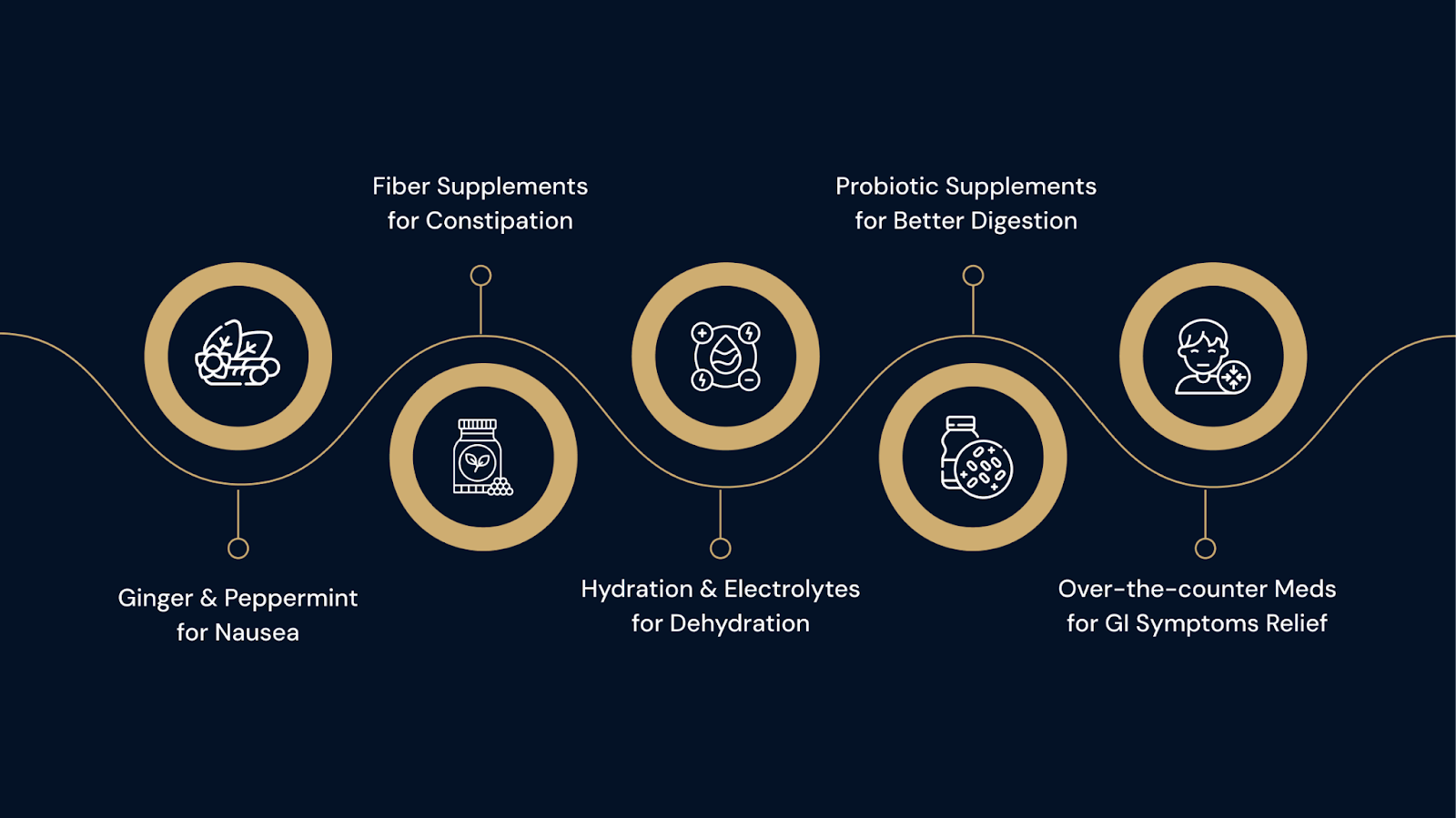
Certain supplements and natural remedies – like ginger, peppermint, or fiber – can relieve GLP-1 side effects (always check with your healthcare provider before starting new supplements).
Sometimes, a few targeted supplements or home remedies can further ease your GLP-1 side effects. While you should consult with your doctor before adding anything new, many people find these helpful:
Ginger & Peppermint for Nausea
Ginger is a time-tested natural remedy for nausea and upset stomach. You can sip on ginger tea or even chew a small piece of candied ginger to help settle your stomach. Peppermint is another soothing option – a cup of peppermint tea or a peppermint oil lozenge can calm feelings of queasiness. Some studies have shown that peppermint can reduce symptoms of nausea and vomiting.
Note: If you have acid reflux, peppermint might worsen it, so ginger could be a better choice in that case. Always use herbal remedies in moderation and consult your healthcare provider, especially if you are taking other medications.
Fiber Supplements for Constipation
If you’re struggling to get enough fiber from food due to a smaller appetite, a fiber supplement might help keep you regular. Products like psyllium husk (Metamucil) can soften stools and ease constipation. Increase fiber intake slowly and drink plenty of water to prevent extra bloating. Your doctor or dietitian can recommend the right type and dose of fiber supplement for you. By preventing constipation, you can also reduce related nausea and discomfort.
Hydration & Electrolytes for Dehydration
As mentioned, staying hydrated is crucial. If you’ve had vomiting or diarrhea, you might consider an electrolyte replacement drink to replenish lost sodium and potassium. These minerals help your body retain fluid and can prevent weakness or dizziness that sometimes accompany dehydration. Even sipping on clear broth can provide electrolytes and fluid at the same time. Maintaining your electrolyte balance can also help alleviate nausea and headaches.
Probiotic Supplements for Better Digestion
Some people report benefit from over-the-counter digestive enzymes or probiotics. For example, enzyme blends that include protease, lipase, and amylase may assist your stomach in digesting meals more comfortably, potentially reducing bloating and “fullness” nausea. Certain probiotic strains might improve gut motility and gas, though research is still evolving. These supplements aren’t necessary for everyone, but if you experience persistent indigestion, you may want to ask your healthcare provider if a short-term trial is appropriate.
Over-the-counter Meds for GI Symptoms Relief
You can also use standard remedies for symptoms if needed. For instance, antacids can help with heartburn, and medicines like simethicone (Gas-X) can relieve bloating by breaking up gas bubbles. If nausea is severe, your doctor may approve an anti-nausea medication, such as ondansetron (Zofran), in addition to the above strategies. Always follow medical advice on these. And remember, most GI side effects from GLP-1s tend to diminish over time, so you likely won’t need extra meds long-term.
Tip: Introduce only one supplement or remedy at a time, so you can tell what’s helping. Keep your healthcare team in the loop about any supplements or OTC meds you take. They can make sure there are no interactions with your prescription and that you’re using them correctly.
By focusing on wholesome diet choices, gentle physical activity, and a few supportive remedies, you can significantly reduce the side effects of GLP-1 medications. These strategies help your body adjust and make it easier to adhere to treatment in the long run.
Remember that everyone’s journey is a little different – be patient with yourself as you find what works best. Over time, your side effects should subside, especially if you continue to maintain these healthy habits. Always stay in touch with your doctor, too. With their guidance and these self-care tips, you’ll be able to enjoy the benefits of your GLP-1 medication while minimizing the bumps along the way. Here’s to feeling better and achieving your health goals with confidence!
Here’s to feeling better and achieving your health goals with confidence!
At VIVORO, we’re here to help you every step of the way, offering personalized GLP-1 programs, ongoing support, and expert care developed to make your wellness journey smoother and more sustainable.
Stay Balanced & Feel Your Best on GLP-1 Therapy with VIVORO

Starting a GLP-1 therapy is not just about weight loss; it’s about feeling your best through every phase of the journey. Our goal is to help you manage side effects with the right balance of care, guidance, and lifestyle support so that you can stay consistent and confident in your progress.
Personalized GLP-1 Care Plans
Every individual responds differently to GLP-1 medications. That’s why our licensed providers design personalized treatment plans that adjust dosage, nutrition, and supplements to fit your unique needs and comfort level, helping you minimize nausea, fatigue, or digestive discomfort while maximizing results.
Expert Lifestyle Guidance
Our team goes beyond prescriptions. We guide you through practical strategies to minimize side effects by optimizing food timing, hydration, and exercise routines that complement your medication. Each recommendation is grounded in science and presented in a clear, straightforward manner to be easily applied in your daily life.
Support for Long-Term Success
At VIVORO, you’re never on your own. We offer ongoing telehealth check-ins, continuous monitoring, and holistic support to ensure your treatment stays on track. Our approach helps you stay motivated and manage side effects smoothly as your body adapts to treatment.
Your wellness journey should feel empowering, not overwhelming. With the proper guidance, you can overcome temporary side effects and focus on what matters most: lasting health, balanced energy, and confidence in your body.
Take your 5-minute assessment today and begin your journey with VIVORO.